 Faucet
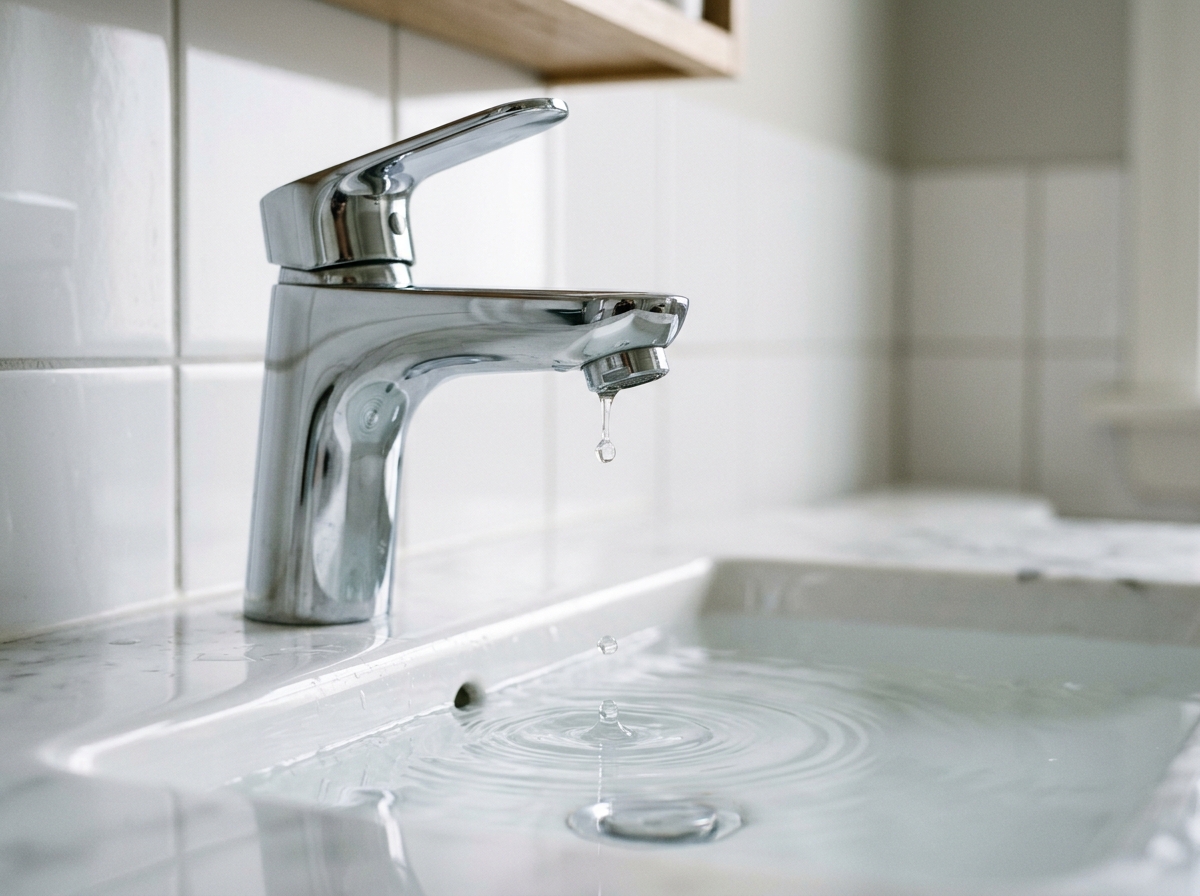
The Mathematics of Water Waste: Counting the Drops
Most homeowners dismiss a slow, steady drip in the guest bathroom or kitchen as nothing more than a mild auditory nuisance. However, the cumulative physics of fluid dynamics tell a very different story. Municipal water is supplied under continuous pressure, typically between 50 and 70 pounds per square inch (PSI). When an internal faucet seal fails, that pressurized water escapes continuously, 24 hours a day, 365 days a year.
According to research from the United States Geological Survey (USGS) and the EPA WaterSense program:
- 10 drips per minute: Wastes approximately 1.44 gallons per day, or 526 gallons annually.
- 30 drips per minute: Wastes 4.32 gallons per day, or 1,577 gallons annually.
- 60 drips per minute (1 drip per second): Discharges 8.64 gallons daily, adding up to over 3,150 gallons of clean water poured directly down the drain.
- A continuous thin stream: Can discharge upwards of 250 gallons every single day — wasting over 90,000 gallons in a single year.
Financial Impact on Your Monthly Water & Sewer Bill
Municipal water billing is calculated in units of either 1,000 gallons or CCF (centum cubic feet, equivalent to 748 gallons). Importantly, most city utility authorities also calculate your sewer rate directly as a percentage of your incoming water meter reading. When water drips down your sink, you pay for that wasted volume twice: once as incoming drinking water and once as outgoing sanitary wastewater.
| Drip Rate (Drips / Min) | Annual Gallons Wasted | Estimated Annual Water Bill Increase | Typical Repair Solution |
|---|---|---|---|
| 15 drips/min (Slow) | ~780 Gallons | \ – \ / year | Aerator cleaning / O-ring replacement |
| 30 drips/min (Moderate) | ~1,570 Gallons | \ – \ / year | Cartridge replacement |
| 60 drips/min (Fast) | ~3,150 Gallons | \ – \ / year | Valve seat re-grinding / Stem swap |
| Steady Slow Stream | ~30,000+ Gallons | \ – \,200+ / year | Full emergency valve replacement |
Hidden Collateral Damage Caused by Unchecked Leaks
The financial cost visible on your monthly utility statement is often the least expensive consequence of a neglected fixture. Persistent water dripping introduces several severe secondary hazards:
1. Permanent Basin Etching and Mineral Scale
As water drops continuously impact the exact same square inch of your porcelain, ceramic, or composite sink basin, dissolved minerals (calcium carbonate, magnesium, and trace iron) precipitate out of solution. Over months, this creates deep brown, orange, or teal calcium crusting that permanently stains and etches delicate basin glazes.
2. Under-Sink Cabinet Rot and Subfloor Structural Damage
While spout drips are visible, internal faucet cartridge failures frequently allow pressurized water to track downward along the faucet body beneath the sink deck. Moisture silently accumulates on particleboard cabinet floors, causing swelling, delamination, and subfloor rot. Explore our bathroom faucet repair services to diagnose concealed vanity leaks.
3. Toxic Mold Proliferation
Enclosed vanity cabinets offer dark, warm, and humid environments. Constant moisture feeding into unventilated cabinets produces black mold (Stachybotrys chartarum) colonies within 48 to 72 hours, creating serious indoor air quality and respiratory hazards for your household.
How to Stop the Drip and Conserve Water
Fixing a dripping faucet is one of the highest-ROI home maintenance repairs available. In most cases, a certified plumber can extract the failed internal cartridge, replace worn rubber seats and springs, and test total line pressure in under an hour. If you're struggling with a persistent leak, contact Faucet Pros at 866-920-1482 for prompt local dispatch.
Need an Expert Plumber to Inspect Your Faucet?
Save money and protect your home from water damage. Connect with a pre-screened local technician through Faucet Pros today.
Call Dispatch: 866-920-1482