 Faucet
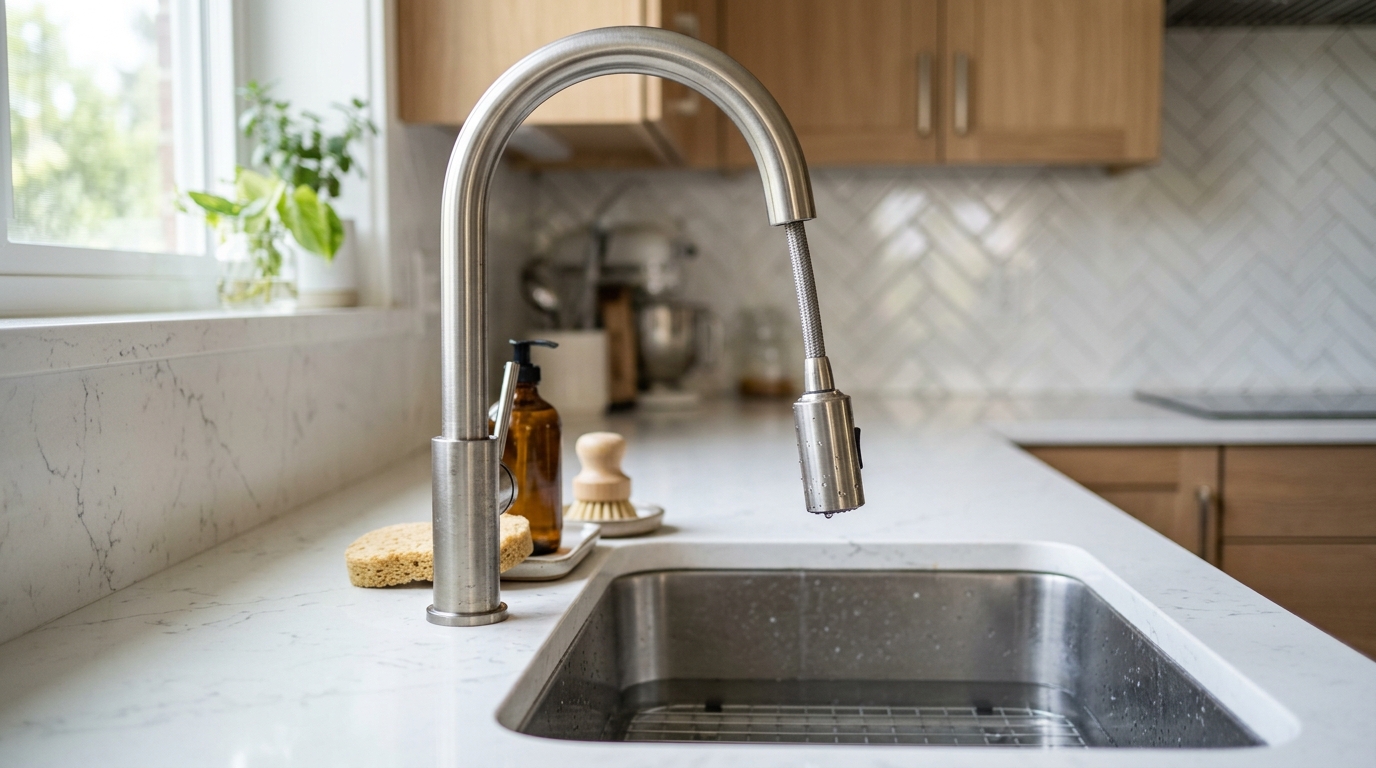
The Dilemma: Rebuilding an Old Fixture vs. Starting Fresh
When a kitchen or bathroom faucet starts dripping, spraying erratically, or leaking into the vanity below, homeowners are faced with a straightforward question: Is it worth fixing this fixture, or should I replace it with a new one?
While repairing a faucet avoids shopping for new hardware, sinking money into an aged, corroded fixture can lead to repeat service calls and escalating water damage. Let's break down the professional criteria licensed plumbers use to help homeowners make the right decision.
When Repairing Your Faucet Makes Complete Sense
In many scenarios, targeted repair delivers another 5 to 10 years of reliable service for minimal expense:
- The Fixture Is Under 8 Years Old: Premium brands (Moen, Delta, Kohler, Grohe) are engineered to last 15 to 20 years. If the fixture is relatively young, the leak is almost certainly isolated to a consumable part (cartridge, O-ring, or aerator).
- The Leak Is Above the Sink Deck: Dripping from the spout or weeping around the handle is easily solved with a new cartridge without touching under-sink supply lines. Explore our kitchen faucet repair services for quick component swaps.
- High-End Architectural or Designer Fixture: Luxury custom fixtures (such as wall-mounted bridge faucets or unlacquered brass finishes) cost \ to \,500+ to replace. Rebuilding internal stems is dramatically more cost-effective.
- Replacement Parts Are Readily Available: Name-brand OEM cartridges are carried on service trucks and can be replaced in under an hour.
When Complete Replacement Is the Superior Financial Choice
| Factor | Candidate for Repair | Candidate for Replacement |
|---|---|---|
| Fixture Age | Under 8 – 10 years old | Over 12 – 15 years old |
| Metal Condition | Clean brass/finish, no pitting | Deep green oxidation, pitting, cracked metal |
| Brand Quality | Tier 1 (Moen, Delta, Kohler, Grohe) | Unbranded, cheap builder-grade import |
| Repair Cost Ratio | Under 35% of replacement cost | Exceeds 50% of full replacement cost |
| Parts Availability | OEM parts stocked on truck | Obsolete, discontinued, or proprietary |
Key Warning Signs That Replacement Is Mandatory
1. Pitted Brass and Structural Metal Fatigue
Over years of contact with municipal chlorine and dissolved minerals, the internal brass castings of cheaper faucets undergo dezincification. The zinc leaches out of the brass alloy, leaving the metal brittle, porous, and prone to cracking under water pressure. If a plumber spots internal pitting, attempting to install a new cartridge will not seal and replacement is required.
2. Corroded Mounting Hardware Beneath the Sink
If the mounting nuts and steel horseshoe washers holding the faucet to the countertop have rusted into a solid mass of iron oxide, the fixture cannot be tightened or aligned. Removing it often requires cutting the mounting stud with an oscillating saw, making full replacement necessary.
3. Cheap "Builder-Grade" or Generic Off-Brand Fixtures
Many new-construction subdivisions install inexpensive plastic-bodied faucets with unbranded internal cartridges. These parts are rarely sold in supply houses, and their plastic valve bodies degrade quickly under hot water cycles. Upgrading to a solid brass name-brand fixture pays for itself in avoided leaks.
Upgrading to Modern Features: Efficiency and Convenience
Replacing an aged faucet isn't just about stopping leaks — it's an opportunity to upgrade your home's functionality:
- High-Efficiency WaterSense Aerators: Modern fixtures reduce water consumption from 2.5 GPM to 1.5 or 1.2 GPM without sacrificing rinsing pressure, lowering utility bills permanently.
- Hands-Free Touchless Technology: Electronic sensor faucets reduce cross-contamination while cooking and keep messy hands off polished chrome.
- PVD (Physical Vapor Deposition) Finishes: Modern brushed nickel, matte black, and oil-rubbed bronze finishes are molecularly bonded to the metal, resisting water spots and tarnishing for decades.
Speak with a Verified Local Plumbing Specialist
Still unsure whether to repair or replace? A licensed technician from Faucet Pros can inspect your fixture, evaluate valve seat integrity, and provide transparent side-by-side quotes for both repair and brand-new installation. Call our 24/7 team at 866-920-1482 today.
Need an Expert Plumber to Inspect Your Faucet?
Save money and protect your home from water damage. Connect with a pre-screened local technician through Faucet Pros today.
Call Dispatch: 866-920-1482